Our Framework
Integrated Trade Compliance
The 7-Phase Cycle: From Strategy to Audit.
Strategy & Due Diligence
Risk assessment, customs footprint mapping, and supply chain due diligence.
Technical Pillars
Master data management for HS Classification, Customs Valuation, and Rules of Origin.
Authorizations & Procedures
AEO status acquisition and management of Special Procedures (Inward/Outward Processing, Customs Warehousing).
Pre-Shipment Controls
Dual-Use/Sanctions screening, Export Licensing (ECJU/UAMA), and Incoterms optimization.
Declarations & Governance
Broker management supervision, CDS/GVMS submissions, and clearance monitoring.
Audit & Reconciliation
Post-clearance audit, MSS Data reconciliation, and Import VAT (PVA) validation.
Reporting & KPIs
QBR (Quarterly Business Reviews), duty savings tracking, and compliance dashboards.

The framework is meant to structure mandates, not just explain them.
Clients do not buy a seven-step poster. They buy a clearer sequence for decisions, evidence, ownership and repeatable control across UK and EU-facing activity.

The methodology has to survive live corridors, brokers and management review.
Classification, origin, valuation, controls and documentary governance only create value when the method still works once the next shipment, review cycle or urgent escalation arrives.
| Engagement form | How the methodology is used | Why clients choose it | Typical commercial form |
|---|---|---|---|
| Diagnostic / entry work | We use the early phases to map footprint, data quality, control ownership and the first high-value remediation backlog before the client commits to a broader program. | The reader can see a bounded first step: facts first, priorities second, larger redesign only where the evidence justifies it. | Usually a fixed-fee entry review with a defined readout, clearer priorities and a recommendation on what the next mandate should be. |
| Advisory projects | Phases are activated as workstreams for origin, valuation, export controls, trust architecture, customs remediation or corridor redesign, with clear outputs and control owners. | This makes senior advisory feel concrete: the mandate is organized into decision layers, deliverables and operating checkpoints rather than open-ended consulting language. | Usually project-based or phased, particularly where evidence building, design choices and implementation support need to be separated clearly. |
| Retained / fractional support | The framework becomes a control cadence: exception review, management escalation, evidence refresh, broker governance and post-clearance learning loops. | Clients access seniority without building a full internal function immediately, while still getting a repeatable model for recurring shipments and regulated flows. | Usually recurring support or fractional leadership coverage, sometimes combined with narrower workstreams on specific technical themes. |
| Enablement / digital layer | Decision matrices, evidence standards, workflow rules and audit memory are translated into forms, routing logic, dashboards and supervised digital support. | The value is qualitative but commercially real: less rework, fewer disconnected files, clearer ownership and better continuity between customs, finance, operations and compliance. | Often hybrid in form, combining project economics with ongoing support and, where appropriate, selected value-linked logic tied to repeatability or reduced rework. |
Transformation proof, made publish-ready
The attached transformation slides were useful because they combined framework thinking with operating evidence. The public versions keep that sequence while anonymizing the program and making the panels usable in-browser.
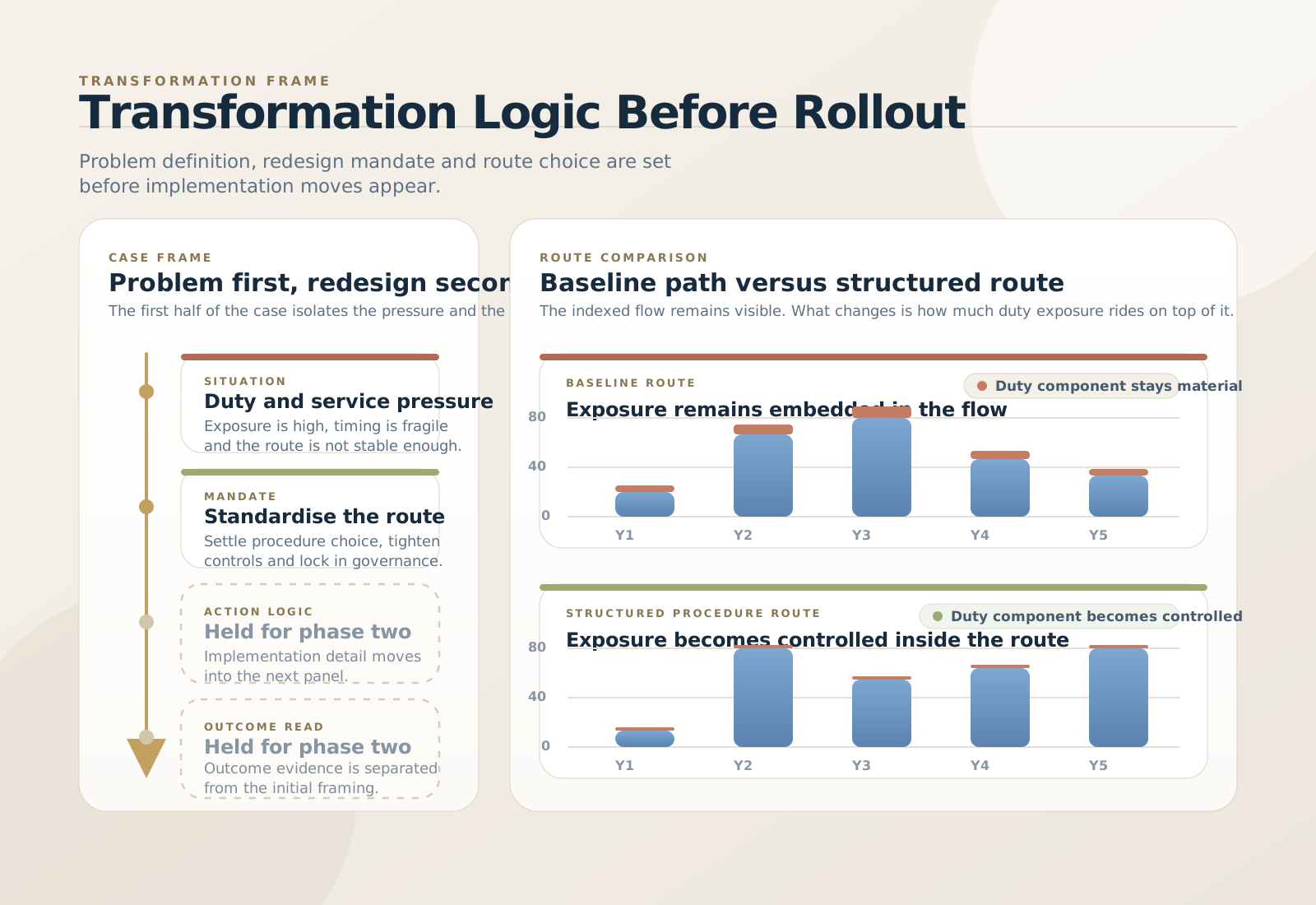
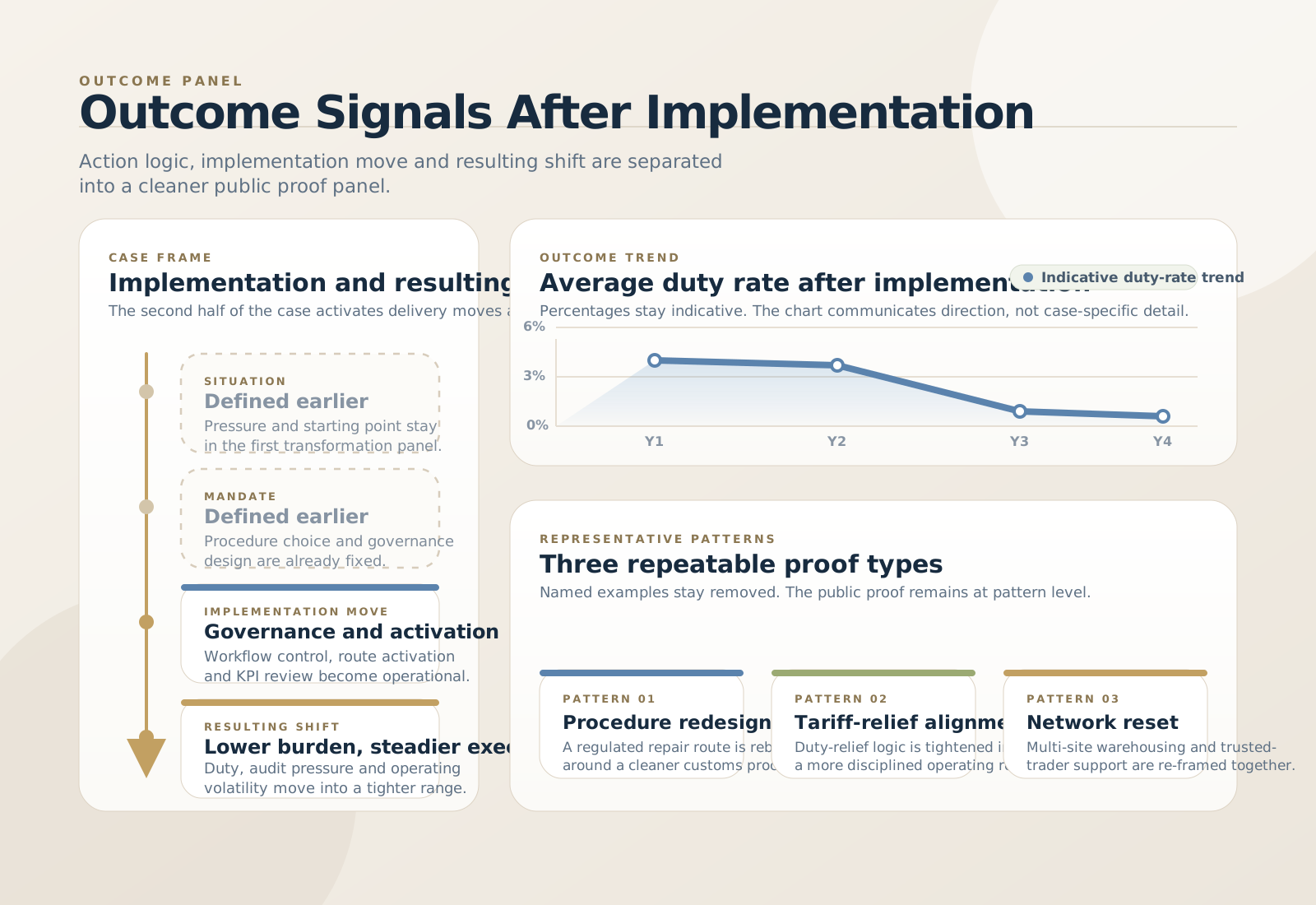
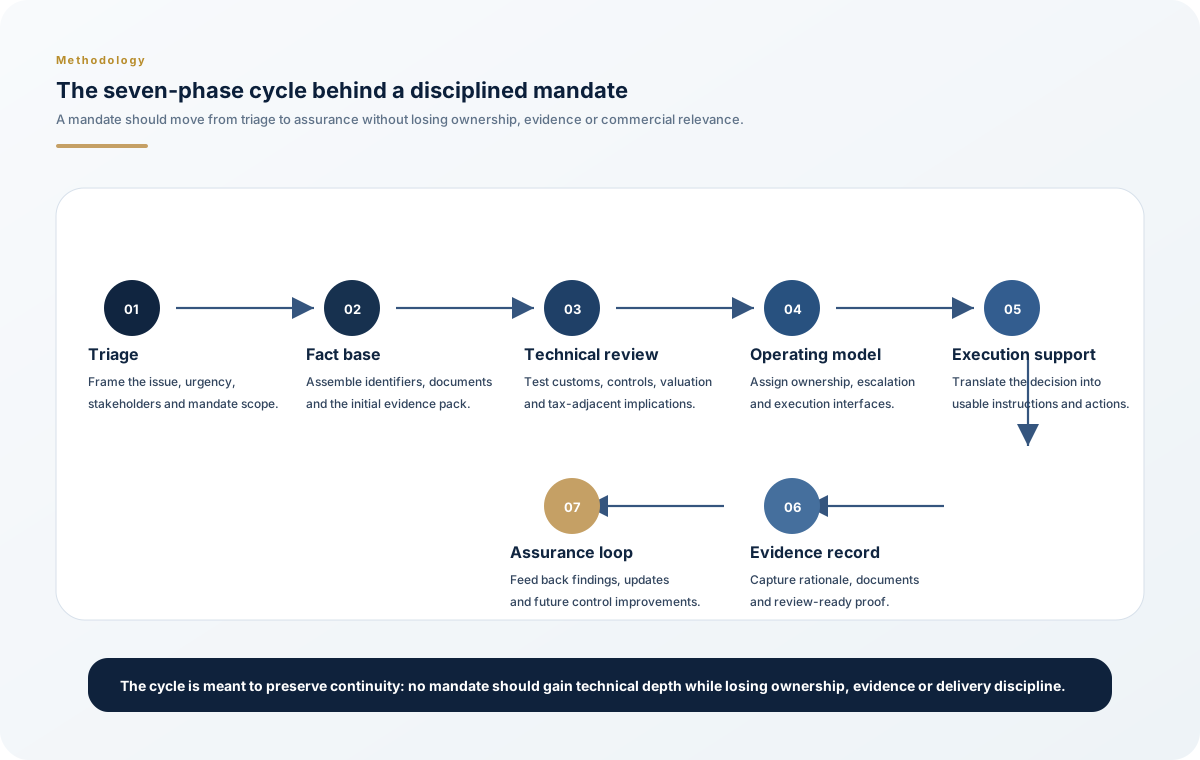
The method exists to hold together technical depth and live execution.
Each phase is written to connect product facts, documentary order, customs execution, finance alignment and management accountability rather than leaving each function to improvise separately.
How each phase works in practice
Where a mandate also needs Italy/EU-side material customs-formality execution, the methodology does not change into a different discipline. The same analytical perimeter can be paired with CIESSE so advisory architecture and practical flow control stay aligned rather than split across unrelated methods.
Strategy & Due Diligence
Phase 1 establishes a fact-based baseline before any remediation starts. We map legal entities, shipment corridors, broker models, master data quality and current control ownership, then test whether declared practice matches written policy. This is where hidden exposure usually surfaces: inconsistent HS logic between plants, undocumented origin assumptions, and manual exceptions repeated without root-cause closure. The output is a prioritized risk map with decision owners, escalation paths and a first remediation backlog aligned to business impact. By clarifying what must be fixed now versus what can be sequenced, the team avoids broad, low-yield workstreams and focuses on issues that affect clearance reliability and audit defensibility.
Technical Pillars
Phase 2 translates legal requirements into controlled data rules. We define which attributes drive classification, origin and valuation decisions, where those attributes are stored, and how they are validated before declarations are generated. This phase also introduces decision standards for ambiguous cases and formal review thresholds so teams stop relying on historical shortcuts. In practice, it means fewer broker clarifications, less manual recoding and faster exception handling because the information model is explicit. Deliverables include master-data standards, decision matrices and exception taxonomies that can be embedded in ERP, workflow tools and broker instructions.
Authorizations & Procedures
Phase 3 hardens the authorization perimeter. We review whether current procedures, declarations and documentary evidence are aligned with special procedures, trusted trader commitments and license obligations. The focus is operational viability: can teams execute daily without generating avoidable variance? We define controls for authorization conditions, hand-off checkpoints and renewal readiness, then connect those controls to accountable roles and timelines. This reduces the risk of drift between policy and execution, especially in organizations where procurement, logistics and tax operate on different cadences.
Pre-Shipment Controls
Phase 4 introduces prevention controls before goods move. Screening, licensing checks, destination logic and documentation readiness are moved upstream into order and shipment preparation steps, where corrections are cheaper and faster. We define minimum evidence for release, escalation triggers for risk signals and response SLAs for urgent transactions. This is where organizations usually reduce false positives and last-minute shipment holds: by applying structured triage and consistent decision criteria instead of ad hoc email approvals. The phase ends with clear release gates and a repeatable exception workflow.
Declarations & Governance
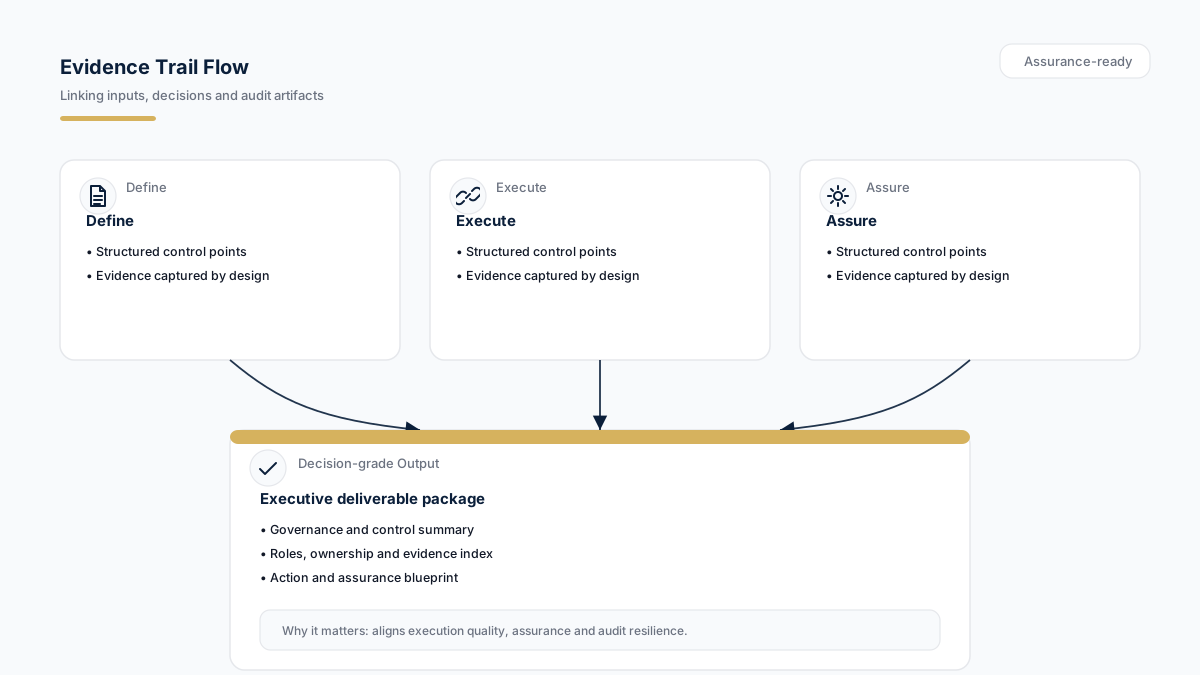
- Daily clearance exceptions dashboard with ownership and SLA.
- Broker instruction pack with quality gates and escalation matrix.
- Weekly recurring-cause review to remove structural rework.
- Management view of operational risk, backlog and financial impact.
Audit & Reconciliation
Phase 6 validates that execution outcomes match declared policy and financial records. We reconcile declaration data with ERP postings, review adjustments and test whether evidence trails are complete, coherent and retrievable under audit pressure. This phase is not just retrospective control: it feeds defect patterns back into upstream phases to prevent repeated variance. Outputs include reconciliation packs, control effectiveness findings and prioritized remediation tickets with named owners.
Reporting & KPIs
Phase 7 turns control data into management decisions. We define KPI sets that reflect operational reliability and compliance quality, not vanity metrics: exception aging, rework ratio, clearance cycle times, correction volumes and evidence completeness. Reporting is structured by audience, from operational control rooms to executive review, with clear thresholds for escalation and intervention. The result is a governance cadence that supports scale without losing control quality.