Sector Focus
Aerospace and Defence Logistics
Governance-led support for AOG movements, special procedures, release documents and defence-sensitive cross-border execution.
Why this sector needs tighter execution logic
Aerospace and defence flows compress time, documentation and risk into the same movement. The cost of ambiguity is therefore higher than in routine trade lanes.
AOG events, repair loops, defence-sensitive transfers and special-procedure use cases all require more than routine customs handling. Release documents, end-use assumptions, repair-return logic, licensing posture and customs procedure design need to stay aligned even when the movement is urgent. If they do not, the business faces avoidable delay, weak evidence for relief claims or a fragmented record that becomes difficult to defend afterwards.
CSA Nexus supports these mandates as governance-heavy operating matters. The question is not only whether a movement can be filed. It is whether the end-to-end record remains coherent across engineering, maintenance, broker execution, customs assumptions and the commercial urgency driving the shipment.

Urgency only works when the evidence chain stays intact.
AOG pressure, repair loops and defence-sensitive movements expose every weak handoff between engineering records, broker execution and control assumptions.
Core workstreams
The emphasis is on defending speed with stronger process discipline, not slowing time-critical flows with decorative compliance steps.
AOG and urgent movements
Escalation logic, documentary completeness and broker coordination for movements where every hour matters but the evidence still needs to survive later review.
Repair loops and special procedures
Support on repair-return models, inward processing, end-use logic and release documentation where the economic case depends on correct procedure use and file integrity.
Controls-sensitive execution
Integration of export controls, end-user concerns and sector-specific evidence requirements into the broader operating model for civil and defence-sensitive cases.
Operational implications
In aerospace, a document gap is rarely just a document gap. It can affect release, installation, customs treatment, duty relief, recordkeeping and the practical value of the part itself. That is why the file needs to remain readable across the whole movement: what the part is, why it is moving, under which customs logic, under which release assumptions and with what supporting evidence.
We help clients structure that chain so urgent execution does not leave behind an incoherent audit trail. This is especially important where the same component, repair loop or stock model will be repeated over time.
Why the sector lens matters
Aerospace and defence flows intensify every normal weakness: documentation arrives later, values are higher, movements are more time-sensitive and the interface between customs, controls and engineering is sharper. A generic logistics page does not capture that. A sector-specific operating model does.
That is also why the public positioning stays careful. We present the sector for the mandates it genuinely creates: technically dense, high-pressure and documentation-sensitive work where governance quality directly affects execution quality.
Recovered sector execution blocks
The aerospace page now regains the legacy NATO, DTTI, dual-release, AOG and duty-suspension structures that were no longer visible in the current served version.
Military Mobility & NATO Procedures
Moving defence assets often requires customs exemptions and transit substitutions that normal commercial flows never need to consider.
- NATO Form 302: the operating passport for military goods under NATO SOFA-style movement logic.
- Function: replaces or reshapes transit and duty/VAT proof expectations for designated military movements.
- Operations: pre-authentication and customs-office coordination remain critical where time and sensitivity converge.
DTTI & Licensing
Intra-EU defence transfers and programme-sensitive movements need licensing logic that stays readable across customs, programme and security functions.
- DTTI / transfer documents: management of intra-EU defence transfer paperwork and downstream evidence retention.
- General licences: use of framework authorisations where certified receivers or programme conditions permit them.
- US controls adjacency: keep ITAR/EAR implications visible where the programme has US-origin content or technical restrictions.
Civil Aviation: The Dual Release Strategy
Customs is not just about tax in this sector. The release logic has to remain aligned with airworthiness evidence and installation usability.
- EASA Form 1: EU authorised release and traceability anchor for the part file.
- FAA 8130-3: US airworthiness approval that keeps transatlantic inventory usable.
- End-use relief: customs logic must still follow the installation and documentary truth of the part.
Why it matters
When dual release is preserved, the component remains installable across fleets and the customs relief story stays aligned with the real technical record.
AOG Response
Aircraft-on-ground urgency is only sustainable when customs, broker and document teams know which checks are mandatory inside the compressed time window.
| Regime | Application | Benefit |
|---|---|---|
| Inward Processing (IP) | MRO and repair of non-EU engines or parts where the repair loop needs customs relief without breaking the technical record. | Suspension of import duty and VAT during repair, with a cleaner re-export story if the conditions remain documented properly. |
| End-Use Relief | Import of parts for installation on civil aircraft, tied to real installation proof and release-certification logic. | Potential 0% duty treatment when the final-use evidence and customs procedure remain consistent end to end. |
Sector control matrix
The aerospace page now shows more clearly where urgency, procedure choice, release evidence and controls-sensitive execution interact inside one sector-specific operating model.
| Scenario | Pressure point | What the mandate stabilises |
|---|---|---|
| AOG and urgent repair movements | Commercial urgency compresses document collection, broker coordination and release review into a very small time window. | We help define a faster but still defensible release model, including what must be checked immediately and what must be preserved for later audit memory. |
| Repair loops and returns | The business struggles to keep repair-return logic, procedure conditions, valuation effects and the engineering record aligned across multiple linked movements. | The file is rebuilt around procedure integrity, repeatability and clearer evidence for why relief or special-procedure treatment should still stand later. |
| Defence-sensitive or controls-linked shipments | Export controls, end-use assumptions and documentation quality are handled separately, which increases risk exactly where the movement is most sensitive. | The mandate connects controls-sensitive review to customs, logistics and release evidence so the sector file remains coherent under scrutiny. |
| Recurring stock and inventory flows | Time-critical moves repeat, but the organisation keeps solving them as if each case were brand new, which compounds error and hidden cost. | Clients gain a more stable operating pattern for repeat events, with clearer document logic, escalation rules and better sector memory. |
AOG and dual-release visual workflow
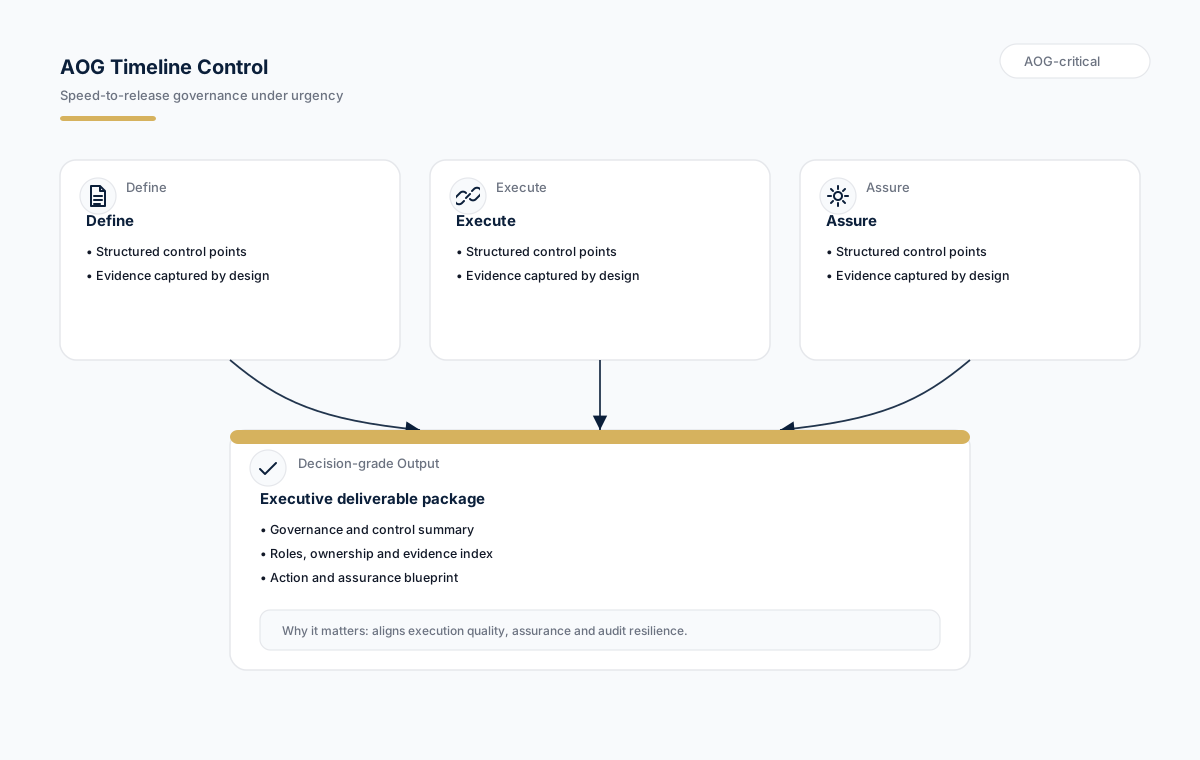
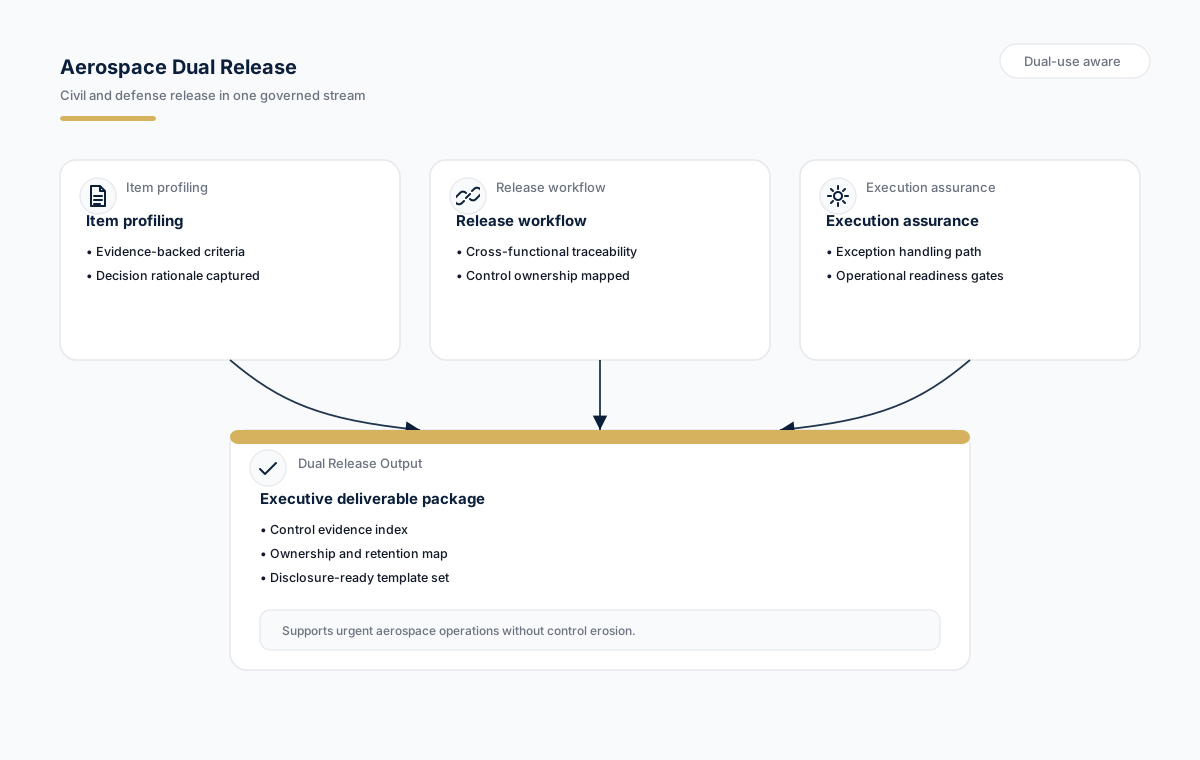
Aerospace supply chains operate under extreme time pressure where documentation and traceability are non-negotiable. A part without a retrievable record is a risk, and a shipment that clears without the right evidence becomes a future dispute. We align customs execution with airworthiness documentation, including release certificates and trace requirements, and design procedures that keep both regulatory narratives consistent.
For AOG scenarios, we build playbooks that prioritise speed while preserving controls: pre-checklists, broker handover packs, and a post-action review that closes root causes. The objective is continuity under pressure: parts move fast, and the organisation remains audit-ready.
Why it matters
Weak file discipline in this sector does not just create delay. It can undermine relief claims, airworthiness-linked confidence and the commercial value of time-critical inventory.
What clients should expect
Stronger procedure design, clearer document logic, faster escalations and better alignment between operational urgency and evidence quality.
Where it connects
AOG execution, repair loops, special procedures, end-use assumptions and export-control sensitivity all sit on the same governance spine once the movement becomes critical.
Need a cleaner operating model for aerospace, defence or urgent repair flows?
We help align customs, controls, procedure design and documentary quality before the next urgent movement turns the same weakness into a repeat incident.